 Tivoli Tours from Rome
Things to Do in Tivoli: Villas, Temples and Old Town
This guide to the things to do in Tivoli, Italy, ranks the sights by what one visit can actually hold. Villa d'Este costs €15 and fills half a day with fountains. Hadrian's Villa sits 4 km below the town and needs three hours or more. Between them stand the free Temple of Vesta, the €10 waterfall park of Villa Gregoriana, a €6 papal fortress and a €8 Roman sanctuary. The figures below come from the official sites, the FAI park pages and the town's own tourism sources. If you would rather skip the trains and buses, Tivoli tours from Rome cover the two big villas in one booking, and the day trip from Rome page compares them all. The bookable tours are compared on Tivoli day trip from Rome.
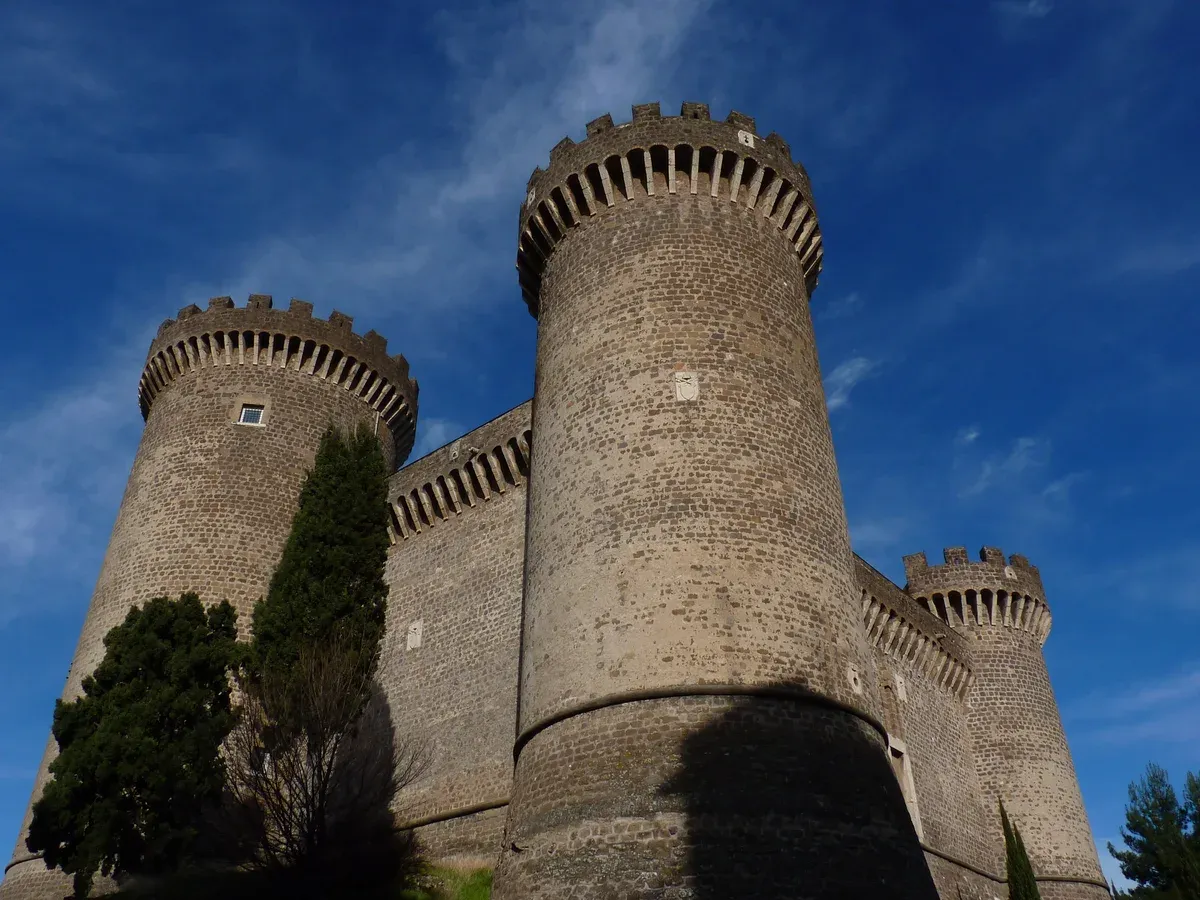
The towers of Rocca Pia castle against a blue sky. Photo: Justinawind, CC BY-SA 4.0, via Wikimedia Commons
Quick answer Tivoli in one page
The main things to do in Tivoli are Villa d'Este (€15, about 2.5 to 3.5 hours), Hadrian's Villa 4 km below the town (plan 3 to 4 hours) and Villa Gregoriana (€10, about 90 minutes of stairs to a 100 m waterfall). In town, the Temple of Vesta and the Temple of the Sibyl are free to view, and the Santuario di Ercole Vincitore costs €8. A full two-villa day takes about 7 to 8 hours including the bus between them, so pick three sights, not five.
Key takeaways
- Two villas in one day is the classic plan: see the Villa d'Este guide and the Hadrian's Villa guide for hours and tickets, or let a day tour to both villas with entry and a guide handle the coach and the queue.
- Getting there is easy: the Rome to Tivoli guide covers the FL2 train from Roma Tiburtina, about 57 minutes typical, and the Cotral bus from Ponte Mammolo.
- The old town is free: Temple of Vesta, Ponte Gregoriano, the Duomo and the medieval lanes cost nothing.
- Short on time? A 5 hour half day coach tour with tickets to both villas covers the essentials, and the Tivoli day trip from Rome shows every option side by side.
Things to Do in Tivoli at a Glance
Every sight on this page in one table, with the ticket price and the time a visit takes. Prices come from the Villae, FAI and town sources named in each section below.
Prices and Time Needed for Each Sight
The villa and park times are the figures the official and park sources give, and the shorter town stops are rough allowances. Villa d'Este's own ticket page suggests 2.5 to 3.5 hours, the Hadrian's Villa planning page suggests 3 to 4 for the full visit, and FAI gives about 90 minutes for Villa Gregoriana. Add travel time between sights: Hadrian's Villa is 4 km from the centre, reached by CAT bus 4 in 10 to 15 minutes, while the town sights sit close together on foot.
If both villas plus the old town sound like too much, a Villa d'Este and Hadrian's Villa coach day tour with entry included compresses the two big ones into one booking.
| Sight | Price | Time | Why go |
|---|---|---|---|
| Villa d'Este | €15 (EU 18-25 €2, EU under 18 free) | 2.5-3.5 hours | Fountain gardens, Organ Fountain, UNESCO since 2001 |
| Hadrian's Villa | Covered by the Villae Pass €30 (see section) | 3-4 hours | Emperor Hadrian's 120 hectare estate, Canopus and Maritime Theatre |
| Villa Gregoriana | €10 (ages 6-18 €3, family €23) | 90 min-2 hours | 100 m waterfall, gorge, grottoes, FAI park |
| Santuario di Ercole Vincitore | €8 (reduced €2) | About 1 hour | 2nd century BC terrace sanctuary above the Aniene |
| Temple of Vesta and Temple of the Sibyl | Free to view | 30 minutes | Round 1st century BC tholos, views from Ponte Gregoriano |
| Rocca Pia | €6 (reduced €3) | About 1 hour | 1461 papal fortress, prison until 1960 |
| Cathedral of San Lorenzo | Free | 30 minutes | Baroque Duomo, 47 m Romanesque tower, 1220-30 wooden Deposition |
| Santa Maria Maggiore | Free | 20 minutes | 9th century church, Madonna delle Grazie panel of about 1200 |
| Ponte Gregoriano | Free | 15 minutes | Best viewpoint for the temples and the gorge |
| Old town lanes | Free | 1-2 hours | Piazza Garibaldi to the medieval quarter along Via del Corso |
| Mensa Ponderaria and Augusteum | Free (open certain dates only) | 20 minutes | Augustan Roman measures office at Piazza del Duomo 4 |
| Subiaco side trip | Santa Scolastica free | Full day | St Benedict's monasteries 40 km from Tivoli |
| Palestrina side trip | €5 museum and sanctuary | Half day | Fortuna Primigenia sanctuary and its museum |
Sources: Villae tickets, FAI Villa Gregoriana, imuseidiroma, visittivoli Rocca Pia, cultura.gov.it
The Three Villas
Tivoli's headline sights are two UNESCO villas and one waterfall park. Each has a full guide on this site, so here is the short version with the numbers that matter.
Villa d'Este
The first of the things to see in Tivoli for most visitors. Cardinal Ippolito II d'Este began the gardens in 1560 and the result has 51 fountains, 398 spouts, 364 water jets and 875 m of canals, all fed by the Aniene almost entirely by gravity. The Organ Fountain plays daily from 10:30 and roughly every two hours after that.
The Hundred Fountains run 100 m between the Rometta and the Ovato, and Bernini's Bicchierone stands near the exit. The full ticket is €15, EU citizens aged 18 to 25 pay €2 and EU citizens under 18 enter free. It opens at 08:30 Tuesday to Sunday, 14:00 on Monday, and closes only on January 1 and December 25.
The full Villa d'Este guide has the month-by-month hours.
Hadrian's Villa (Villa Adriana)
The largest site on this list, about 4 km from Tivoli centre and around 30 km from Rome. Emperor Hadrian began building around AD 120 and made the villa his official residence from about 128. Of the roughly 120 hectare estate, about 40 hectares are open, enough for 3 to 4 hours at a steady pace.
The Canopus is a 119 m reflecting pool with caryatid copies, the Maritime Theatre is a round island retreat reached in antiquity by drawbridges, and the Pecile pool measures 232 by 97 m. UNESCO listed it in 1999. The current ticket price sits inside the Villae Pass, which costs €30 and covers Villa Adriana, Villa d'Este and the Santuario di Ercole Vincitore within 72 hours.
Shade is scarce, so bring a hat and water. The Hadrian's Villa guide covers the bus, the route and the museums.
Villa Gregoriana
The third villa is a park, not a palace. Pope Gregory XVI commissioned it in 1835 after the 1826 Aniene flood, and engineers cut two tunnels of nearly 300 m each through Monte Catillo to tame the river. The result is the Grande Cascata, a waterfall of more than 100 m said to be Italy's second highest, seen from paths that drop about 80 m through the gorge past Neptune's Grotto and the Sirens' Grotto.
FAI, the heritage trust, has run the park since 2002 and restored it in 2005. The full ticket is €10, ages 6 to 18 pay €3, a family ticket is €23, and with a 30 minute guided introduction it is €14. The walk takes about 90 minutes to 2 hours, and it is one way: you enter at Largo Sant'Angelo and climb out near the Temple of Vesta.
Wear rubber-soled shoes. The Villa Gregoriana guide has the seasonal calendar, since the park shuts from late December to mid February.
Tivoli Italy: Top 6 Things to Do
A short tour of the town's main sights, from the villas to the old town. Third-party video by 10Minutes-Travel. This site did not shoot it and has no relationship with the creator.
In the Old Town
Everything below is within walking distance of Villa d'Este, and most of it is free. This is what fills the hours before and after the villas.
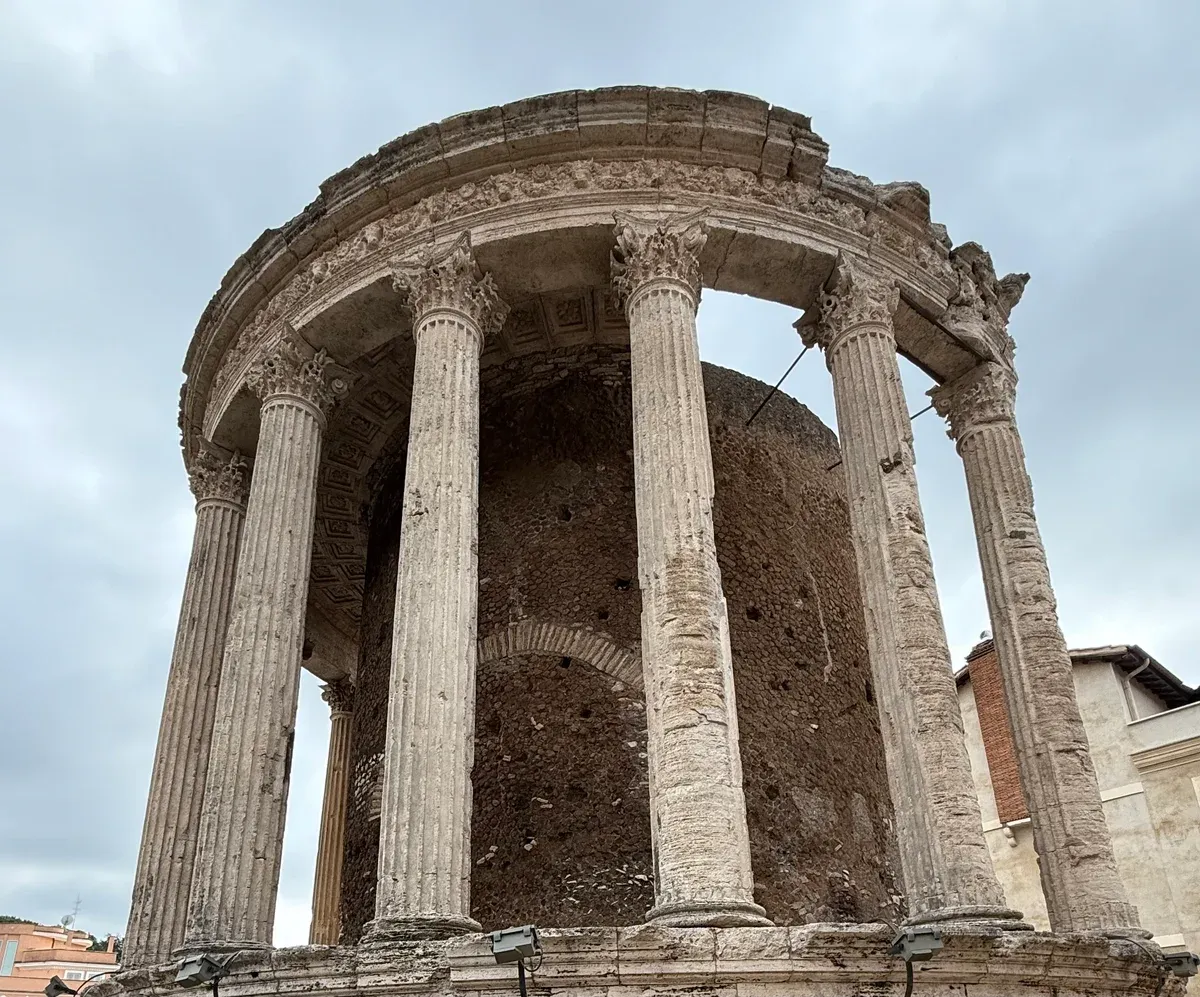
The round Temple of Vesta above the gorge. Photo: Alesca06, CC0, via Wikimedia Commons
Temple of Vesta and Temple of the Sibyl
The round Temple of Vesta is a tholos of the early 1st century BC with ten of its original 18 Corinthian columns still standing. Its cella podium rises 2.4 m and its frieze carries fruit swags between bucrania. Its drawings shaped Soane, Piranesi and Vasi, which tells you how famous it once was.
Beside it stands the rectangular Temple of the Sibyl. Both can be admired up close without a ticket, open daily from 10:00 to 16:00 per a local guide, and the classic view is from Ponte Gregoriano below.
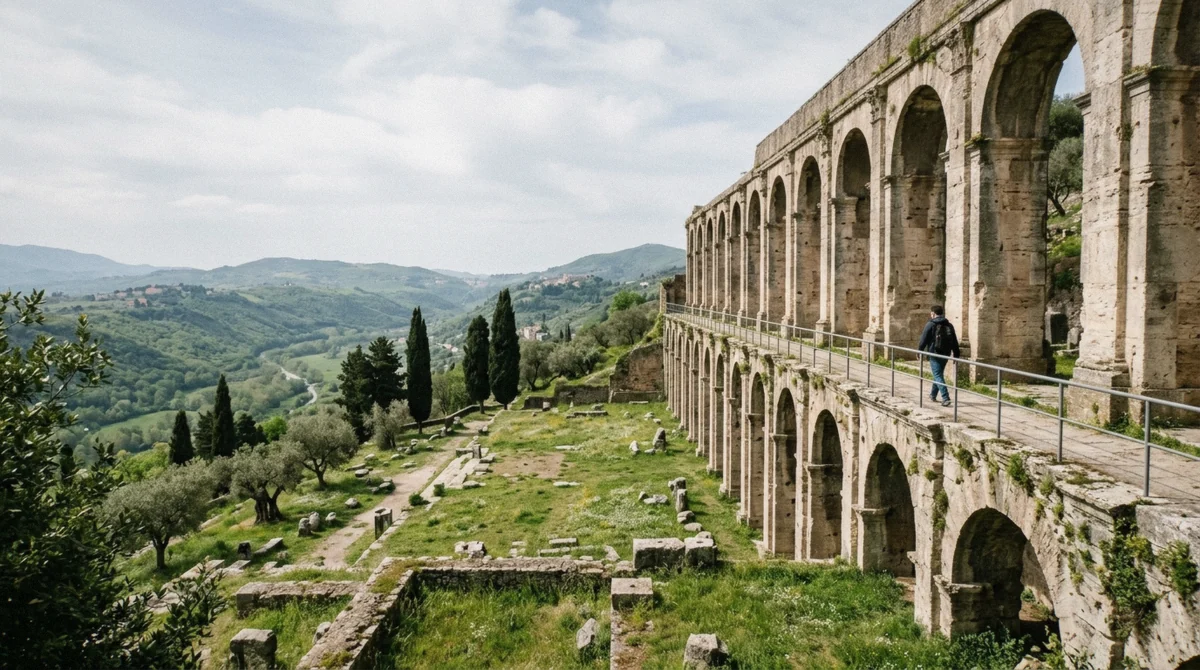
The arcaded terraces of the sanctuary above the Aniene valley.
Santuario di Ercole Vincitore
The Sanctuary of Hercules the Victor is one of the largest Republican sanctuaries in Italy, built from the late 2nd century BC to 82 BC on a terrace above the Aniene. The complex is about 188 m long, with a theatre, a porticoed square and a temple on a 6.5 m podium. The upper portico walk runs about 550 m and the north side falls more than 40 m to the river.
A curious later chapter: in 1892 the first long-distance AC power line to Rome started here. The full ticket is €8, reduced €2, and it is included in the Villae Pass. A visit takes about an hour.
It sits on Via degli Stabilimenti 5, less than 1 km from the train station.
The towers of Rocca Pia. Photo: Justinawind, CC BY-SA 4.0, via Wikimedia Commons
Rocca Pia
Pope Pius II began this fortress in 1461 against the Colonna and Orsini feuds, and its four towers dominate the town, the tallest at 36.5 m. It served as a prison until 1960 and reopened to visitors in 2018. Tickets are €6, reduced €3, and a combined Friday ticket with the Museo della Città costs €10.
It opens Friday to Sunday and holidays only, 09:00 to 19:00 from April to October with last entry at 18:30, and 10:00 to 16:00 from November to March with last entry at 15:45. It closes on December 25 and January 1, so plan around those days.
Cathedral of San Lorenzo
Tivoli's Duomo was rebuilt in 1635-41 as a single-nave baroque church and dedicated in 1641. The nearly 47 m Romanesque campanile survived from the earlier church. Inside, look for the Deposition of Christ, a poplar-wood group of six figures carved by a Cistercian workshop in 1220-30, and the 12th-century Triptych of the Holy Saviour from Farfa Abbey with its 1449 silver cover made by Lucca goldsmiths.
A restoration ran from 2014 to 2019, so the interior is in good order. Entry is free.
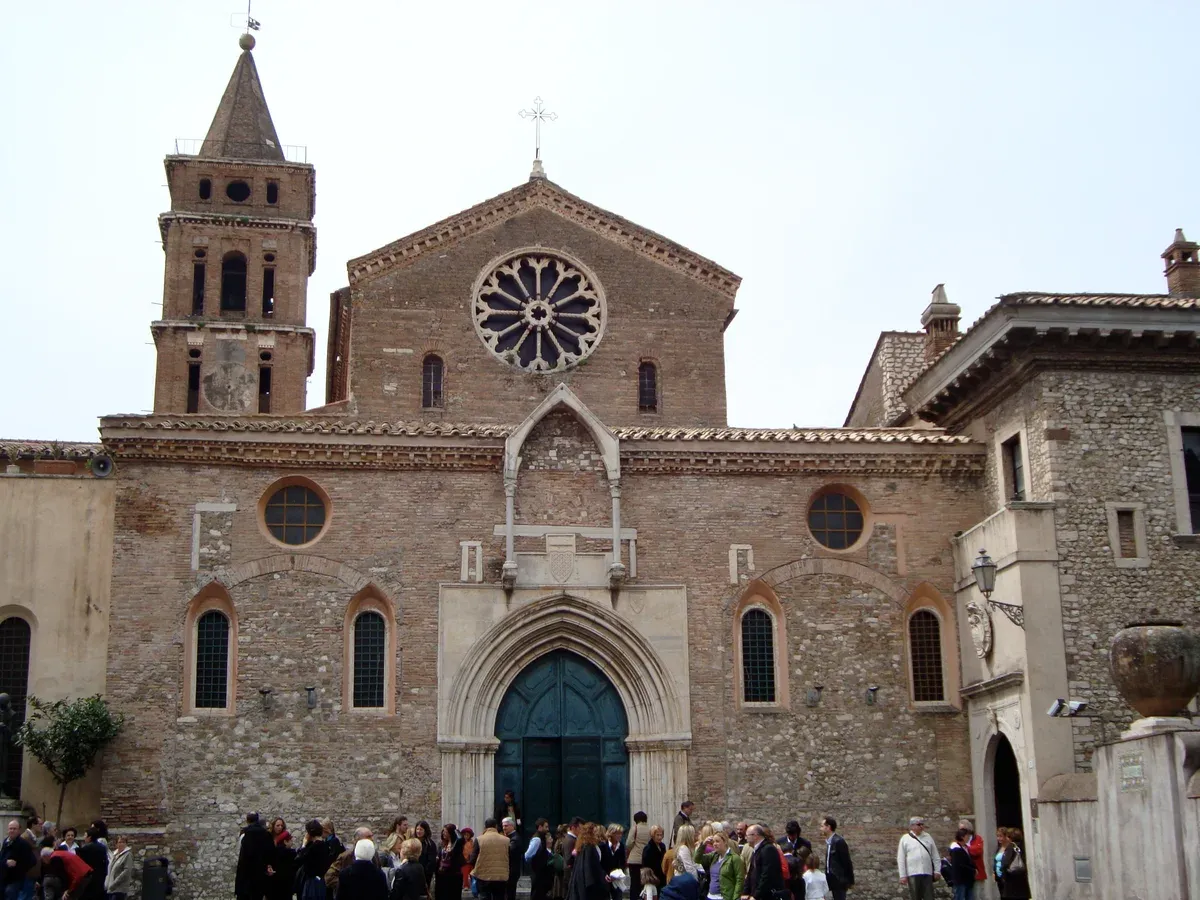
The facade of Santa Maria Maggiore beside the Villa d'Este entrance. Photo: LPLT, CC BY-SA 3.0, via Wikimedia Commons
Santa Maria Maggiore
This church, also called San Francesco, was founded by Farfa Benedictines in the 9th century and stands right beside the Villa d'Este entrance on Piazza Trento, so you will pass it anyway. It has a late 13th-century rose window and a bell tower begun in 1590. The altar holds the Madonna delle Grazie panel of about 1200, and a plaque records the burial of Cardinal Ippolito II d'Este himself, the builder of the fountains across the square.
Free entry.
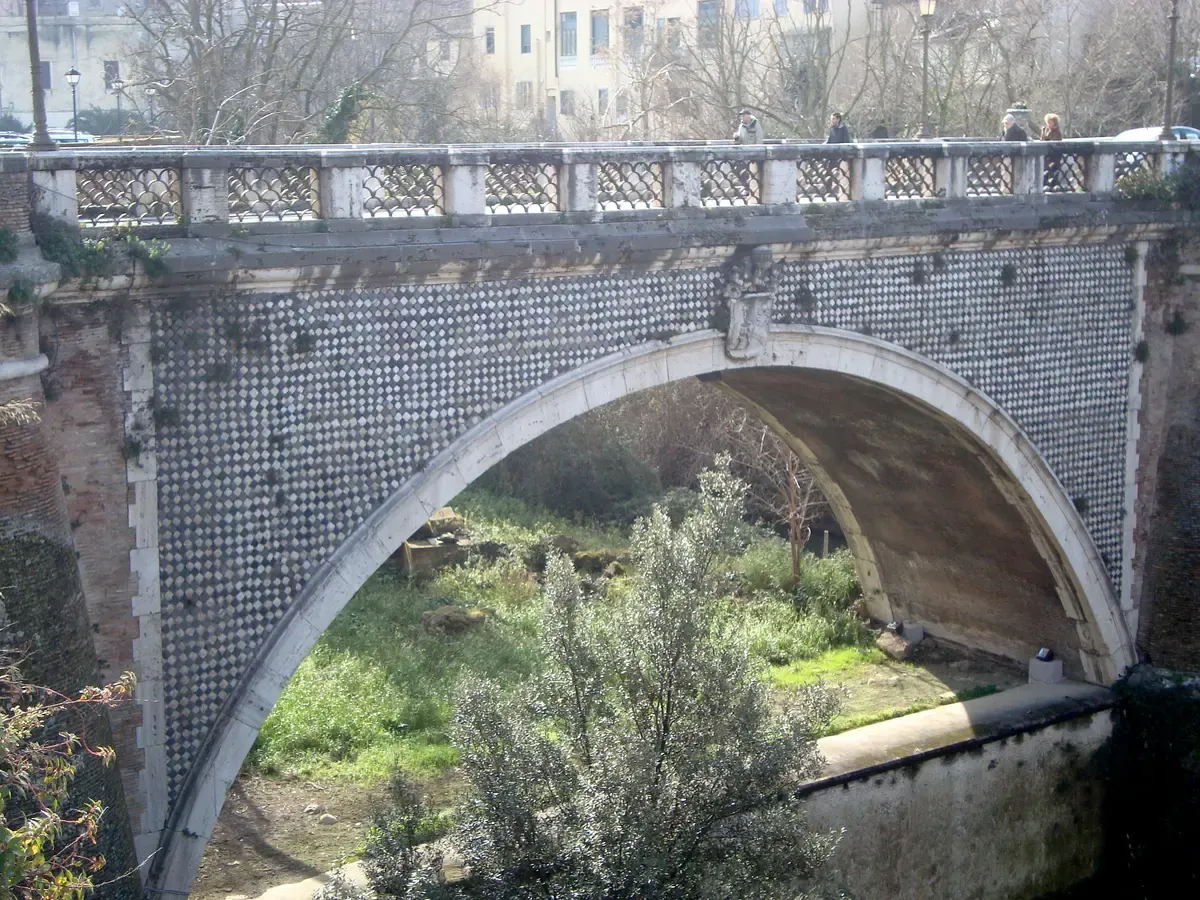
Ponte Gregoriano over the Aniene gorge. Photo: LPLT, CC BY-SA 3.0, via Wikimedia Commons
Ponte Gregoriano
Built in 1834 under Gregory XVI and rebuilt after wartime destruction, this single-arch bridge is the town's best free viewpoint. From it you see the Temple of the Sibyl at 350 m, about 5 minutes on foot, Villa d'Este at 700 m, and the Hercules Sanctuary at 800 m. On the evening of August 14 each year the Saviour image leaves the cathedral and stops here to bless the Aniene during the Festa dell'Inchinata, a tradition documented since 1524.
The Lanes, Squares and Mensa Ponderaria
Between Piazza Garibaldi, Piazza Santa Croce and Piazza Plebiscito, Via del Corso runs down toward the medieval quarter, past the churches of San Silvestro and the Romanesque San Pietro della Carita on Piazza Campitelli. This walk costs nothing. At Piazza del Duomo 4, the Mensa Ponderaria is an Augustan measures office with two marble tables, funded by the freedman Marcus Varenus Dipilus, next to an Augusteum room with a seated imperial statue.
It opens only on certain dates and is not wheelchair accessible, so check locally. Tivoli's travertine quarries supplied stone for most Roman monuments.
The Ponte Gregoriano, the stone bridge over the Aniene gorge in Tivoli. Photo: LPLT, CC BY-SA 3.0, via Wikimedia Commons
What to Eat in Tivoli
The record here sources Tivoli's products and its rated restaurants. Details and a fuller list live on the dining page.
Pizzutello and the Local Table
The pizzutello di Tivoli is a Slow Food Presidium grape, pale green, crisp and thin-skinned, with elongated berries harvested in September. Pliny and Columella both mentioned it, and after WWII it covered about 120 hectares around town, grown on chestnut-pole pergolas tied with the local cartica herb. The Sagra del Pizzutello has run since 1845.
Tivoli's extra virgin olive oil Terre Tiburtine holds a DOP designation, Aniene river trout comes grilled or al carpione, and local sweets include torzetti, amaretti, nociata, Christmas pangiallo and Easter pizza Giulia. For restaurants, the Tivoli restaurants guide names the Michelin-listed addresses, including a Bib Gourmand trattoria and a starred opening, with hours and prices.
Beyond Tivoli: Subiaco and Palestrina
If a second day opens up, the Aniene valley and Palestrina make natural add-ons, and both fit the routes on this site.
Subiaco
Subiaco sits 40 km from Tivoli and about 70 km from Rome, at 408 m on the Aniene. St Benedict founded twelve monasteries here around 520, of which Santa Scolastica survives, with three cloisters from the 13th to 16th centuries and Italy's first printing press, set up in the 1460s. The Sacro Speco, 3 km away at 650 m, is built around the cave where Benedict lived three years and holds the oldest known portrait of St Francis, from 1223.
Santa Scolastica is free, with guided visits of about an hour. The 2 day trip from Rome to Tivoli and the 3 day trip from Rome to Tivoli build Subiaco and Palestrina into full routes.
Palestrina
The National Archaeological Museum and the Sanctuary of Fortuna Primigenia cost €5 full and €2 reduced, free on the first Sunday of the month. The museum opens daily 09:00 to 20:00, and the sanctuary terraces close between 16:00 in winter and 19:00 in summer. A Cotral bus from Ponte Mammolo takes about 57 minutes, running roughly every two hours Monday to Saturday.
The Sanctuary of Fortuna Primigenia is the reason to go.
Things to Do in Tivoli: Questions
Is Tivoli, Italy worth visiting?
Yes. Tivoli holds two UNESCO sites, Villa d'Este listed in 2001 and Hadrian's Villa in 1999, plus a 100 m waterfall park and a free Roman temple quarter, all within about 30 km of Rome. If you would rather not manage two buses and two ticket lines yourself, a coach day tour with entry to both villas and a guide does the work for you.
How many hours do I need in Tivoli?
For both villas, plan 7 to 8 hours including transport between them, per the ticketing guides. Villa d'Este alone takes 1.5 to 3.5 hours, Hadrian's Villa 2 to 4, and the free old town as long as you like. The Rome to Tivoli transport guide shows how the 57 minute FL2 train fits the day.
What can you do in Tivoli for free?
The Temple of Vesta and the Temple of the Sibyl can be viewed free, open daily 10:00 to 16:00 per a local guide, and Ponte Gregoriano, the Duomo, Santa Maria Maggiore and the medieval lanes are all free. On the first Sunday of each month, Villa d'Este and Villa Adriana are also free, though crowds build between 10:30 and 15:30.
What to do at Tivoli in one day?
The workable day is Villa d'Este at opening, the temples and Ponte Gregoriano over lunch, then Hadrian's Villa by CAT bus 4, which takes 10 to 15 minutes from Piazza Garibaldi. If it sounds tight, a 5 hour guided half day with tickets to both villas trims it to the essentials.
Can you do Tivoli without a tour?
Yes. The FL2 train from Roma Tiburtina takes about 57 minutes typical, buses link the town and Hadrian's Villa, and the Villae Pass at €30 covers three sites in 72 hours. The Tivoli day trip from Rome sets out when a tour beats the train and when it does not.
Is Villa Gregoriana suitable for children?
With care. The path drops about 80 m on earth tracks, steps and slopes, FAI recommends rubber-soled shoes and keeping children by the hand, and strollers are not recommended. Ages 6 to 18 pay €3, under 5 is free, and a family ticket is €23.